Every day is a god, and its holiness unfolds through the years. Sometimes god is an iceberg, still while still moving, reminding us to stay and trust the depth. Sometimes god is a candle flame, sometimes the sun that touches us into warmth, or the wind that shifts our eyes towards the unknown horizons we need to go towards. Sometimes god is the touch of a hand. Sometimes god is the seeds of a rose, and the waiting phase until she reaches through the soil for merging, temped by water, tempted by air. Sometimes god is the opening of our hand to feed a squirrel whom we love as one loves any child. Every day is a god.
And within each day, each moment, a movement moving us, dancing us, praying us, shaping us. So we praise each day, each god, as the wind and as the raindrop, as the many colours and nuances and waves. We wake in each god. We wake in each day, in arms holding fabrics and quilts ever weaving us inside the dress of ocean’s time. We wake in a kiss. Because we are already kissed. Because the one kissing is the one kissed and being the kiss itself. Every day is a god, and its holiness unfolds through the years.
Last time in the Dharma of Punarvasu Nakshatra, I shared with you briefly on the dharmic path of this beautiful nakshatra, and today let’s dive deeper into the mysticism of this lunar mansion, as there is so much beauty, inspiration and spiritual wisdom that resides in this part of the sky. Currently, Jupiter is transiting here also until June next year, and this is his favourite place to be. Whether or not you have Punarvasu touch your chart natally or by transit, or you seek to deepen your knowledge and understanding in spiritual astrology, may this be enriching to you.
Punarvasu or Punar Vāsu comes from two words in Sanskrit: punar and vasu. Punar पुन means “to return” and “again, repeatedly, one more”, and vasu वसु means “wealth, goodly thing; one of the Vasus (deities)”. Essentially, punarvasu means “those who again shine”, and is used to speak of return of the light, renewal of the soul.
The vasus are a group of deities, in many accounts eight or more, who are essentially like bright gods, associated with wealth, light, natural forces and wellbeing. They are elemental deities or gods, for example Apa, the one containing water, Soma, the moon, Pratyūṣa, dawn, and Prabhāsa, light. The phrase “Punar Vāsu” thus speaks of a renewal or restoration by the gods or vasus, who give wealth again and again. Punarvasu is a nakshatra which restores goodly things, things from the gods, a return of light to the soul and the human existence.
Each nakshatra has a shakti or feminine power, and for Punarvasu the shakti is vasutva prapana, meaning that its power is its ability to gain wealth. Its basis above is the wind or air, and tts basis below is wetness or rain. These bring about the revitalization of the plants, and a perpetual birth and creation.
Punarvasu brings the return of energy and vitality, like the return of rains after the dry season, so that the most beautiful fragrant roses bloom. It’s life giving and life nourishing. It causes our creative growths and inspirations to be renewed, and it is indeed very inspirational. Inspiration means to “in-spirit”, so when someone is inspiring to you it uplifts you and gives you fire and energy and rising of this energy, you feel alive and desiring to also give of yourself also.
The ruling deity of Punarvasu is Aditi, the mother of all gods. In this part of the sky gods are born, and gods raise us, and Aditi nourishes us giving us the abundance and joy we need.
There are deep feminine and nourishing energies here in Punarvasu. It is also a very creative part of the sky, giving creative and healing abilities to natives, and it’s a nakshatra of fertility, as the mother of all gods, holding the cosmic womb of all creation. This gives birth not merely to physical things, Punarvasu births and rebirths and renews souls, spirit, hearts and love, and births and infuses new ideas and spiritual wisdom into humanity.
Who is Aditi
Aditi is not merely a goddess of motherhood, fertility, consciousness and unconsciousness and all infinite, she is all and everything. Her name means “that which cannot be bound, cut, or limited.”
She is the cosmic womb, the infinite space, the cosmic law, and as mother of all gods adityas, she is essentially the mother of all solar intelligence.
According to Rig Veda (1.89.10),
अदितिर्द्यौरदितिरन्तरिक्षम्
अदितिर्माता स पिता स पुत्र
meaning,
Aditi is the sky, Aditi is the air,
Aditi is mother, father, and son.
While Punarvasu, as Jupiter ruled, is part of the Brahma trimurti, within Punarvasu are actually all trimurti and all gods. There is actually radical non-duality within Punarvasu, it is all and everything. It holds all within itself and its heart, and natives especially with their moon in Punarvasu can really have deep love for all and everything, every person, every little animal, they love as its own, and hold all within their heart as a sacred thing, as a sanctuary.
A lot of Punarvasu natives often come into some saviour role, or seen by others as saviours, and people will seek them out. They can also be very passionate about protecting animals, and becoming great writers and spiritual teachers.
This is a heart centered nakshatra, and there is deep wisdom residing here blessing natives. True intelligence comes from the heart. It’s not a mind thing, not a book thing, it’s a heart centered thing.
Wisdom becomes the saviour. People seek a matured Punarvasu native for the wisdom. Compassion becomes a saviour also, love becomes saviour. Punarvasu moon natives are often called “the chosen ones”, because of Aditi, and Aditi isn’t just the mother of gods, she is the child of god also. She is the child, the mother, the father.
Aditi is often used in prayers to make the prayer more potent, abundant, expansive and auspicious, Aditi is everything auspicious, which is why people would call her for expansion of goodness, joy and virtue and abundance, “May we be abundant and happy and all beings and animals to be abundant and happy also.” As you call upon her she makes everything increase and feel nourished. And here knowledge serves as the greatest nourishment.
Entering the home of the heart, where the soul resides
Punarvasu is the entering of the 4th house, the cave of the heart, the home of our heart. The 4th house is the first intimacy, it is a very intimate space and sacred space within us also; we are concealed in love, cocooned in midnight hours. This house is also seated in the heart yogically, so Punarvasu is a very special nakshatra.
Wisdom resides in the heart, which is why Jupiter loves being here; it’s a sacred home, a sanctuary, quiet yet brilliant with light emanating outward and expanding all. Jupiter’s true wisdom doesn’t like loud noises or big stages or social media; the true guru or true wisdom is more quiet, has its own sanctuary, and isn’t concerned with ego, materialism and fame.
The heart is where the soul resides, and it is here in the 4th house which we enter through Punarvasu, to enter the cave of our heart, the Moon, the sign of Cancer. Punarvasu is often seen as the purest nakshatra, precisely because of its purity of heart connection and Aditi ruling over it. A renewal of the soul, a return to the light, and a deep connection to true wisdom, which is heart centered. Illumination comes only from within the cave of the heart.
There is nothing more powerful that the purity of a heart, because this is the center of spiritual development, which is why in yoga it is one of our greatest secrets of expansion, and through this center it where we reach spiritual illumination, transcendence, moksha and enlightenment. This is also a karmic cleanser naturally, so purification and developing the high heart is the path of dharma and enlightenment. The purity of one’s heart is our greatest “divine weapon”, because there is absolutely nothing more powerful than that, and you become indestructible.
Wisdom needs to be honoured in its sanctuary, because truth too should be honoured and it thrives in a concealed value system. It isn’t distracted by marketing campaigns and external noise, and people’s opinions. This is why Jupiter doesn’t like houses such as the 3rd, and why it finally illuminates when it enters the 4th – because this is the needed sanctuary where his wisdom thrives. It needs a certain rhythm, a certain solace, quietness, a candle flame.
Many Punarvasu natives are very talented writers, and spiritual wisdom flows through them; they are very good at grounding high spiritual knowledge into something that people understand, and can be deeply inspiring, raising people’s spirits and serving as their renewal of hope and faith.
There is also a romanticism to Punarvasu, like romanticizing in expansive ways. So for example, this often manifests through their writing or an art form, such as poetry, where they share spiritual concepts in a way that is artful, mystical, poetic, like sufism; and this serves to expand the knowledge even more and reach further.
There is expansion of spiritual light and the ability to touch many people from all walks of life, because with Aditi, she holds everything and everyone, regardless of where they come from and what they look like. There is a fostering of unity here, nurturing unity.
Punarvasu essentially marries wisdom and maturity of heart, as the entrance from the 3rd to the 4th house, and it shows us the power of speech, words and truth. There are some very misused and abused spiritual concepts in our modern world, such as people who has harsh things but then say something like, “well, I’m just being honest,” when the truth of the matter is, no, you are just being hurtful. This lack of people’s responsibility in their speech is harmful and ignorant and ill intentioned.
Punarvasu natives understand the power of words, and that words are one of our most powerful siddhis or gifts, yet one of the most misused. They may have been hurt by these ill intentioned words spoken by others towards them, or by gossip and bad people, but what’s important to understand and remember is that their light shines so bright, so naturally, some people will feel triggered. No one can take away their light, so just keep going, and be mindful and very discerning whom you surround yourself with. Some people are just not good people, and you are not here to save anyone. Don’t get entangled with ugliness and low energies.
Now let’s move to the symbols of Punarvasu, and today I’ll speak of the animal totem the female cat, the bird symbol the swan, and the plant related to Punarvasu, which is the bamboo.
Here we get insights about the protective nature of Punarvasu natives, and that they are actually very fierce people. Don’t mistake the sweet mothers of gods and Cancerian nurturing natures for weak – these are fierce individuals and very strong, and they do not like people crossing their boundaries.
Both cats and swans are very protective animals, and will fight you if they feel you are crossing their territory or a threat to them or to protect their little ones. They have very strong instincts, and are very territorial, and can get very defensive also. What’s curious to know if you don’t yet know is that both cats and swans hiss as a warning sound. When it feels threatened, a swan arches its neck, spreads its wings, and emits a sharp hiss to deter intruders. In the same way, a cat also arches its back, fluffs its fur, and hisses to signal discomfort or aggression.
So with both the cat and the swan we see the beauty and grace in their movement, while also their strong boundaries, will fiercely defend their boundaries and protect their personal spaces.
They are certainly very graceful, and it’s interesting how Punarvasu natives have a very graceful way of moving. We saw the shakti connect to both air and water, so there is a gentle movement here, graceful and as if living life like art, loving like art. There is a peacefulness here and the ability to create a sanctuary, a space which is illuminating, beautiful, peaceful and comforting, not just for themselves but for others too, where others too will feel such calmness and home. There is a sensual quality here also, so these are very loving individuals, and while very independent, once they do commit to someone they will open up and be very cuddly and sensual.
What some people may not know is that cats are known to nurse other animals, including other kittens not their own and even different animals like puppies. This behaviour is often driven by strong mothering instincts and can occur naturally, particularly when a female cat has recently given birth or is in a
nurturing state.
This carries symbolism, and with Aditi also, we see the ability of Punarvasu natives to just love without boundaries and care for all as if their own. Whether it is a person, a little animal in the park, a project they love, they love wholebodily and wholeheartedly, and will never be too tall not to kneel to help another. The way they are able to love and to create spaces that feel like home, whether literally and physically or emotionally through their words or presence is at the essence of this beautiful heart-led nakshatra.
Omkar originates in Punarvasu, and Omkar is the most powerful mantra holding all trimurti, which why in the beginning I shared how it isn’t just a Brahma trimurti being ruled by Jupiter, but Punarvasu holds all within itself. Whatever follows om goes into multiplication, because whatever comes after om essentially enters the realm of Aditi, which is the realm of the infinite, endless expansion and birthing, repeating and expanding and multiplying. It creates everything to be more potent.
The divine flutes of Krishna are mere musical instruments, they are life itself moving through them raising people in divine love and spiritual illumination. They are divine callings, divine movements. It also symbolizes sacred surrender and union with the divine.
When we empty ourselves of selfishness and ego based or lower desires, symbolized by the hollowness of the flute, we then allow the divine to move through us, and move us, and dance us. We become danced, sung, moved, prayed into becoming enchanting melodies for others also. We become the candle flame itself to shine for others, to nurture their own inner flames. We become the harmony of the soul with cosmic existence, uniting lovers and attracting all creation.
There are also the healing abilities seen by the female cat yoni for Punarvasu, because are also healing. Their purr is known to have many healing benefits, and divine feminine energy is kind of feline; so just with its presence it serves as transmutation and cleansing for everyone else around her, as long as she is also in her balanced energy.
What I find beautifully between the cat, swan and bamboo with Punarvasu is the spiritual wisdom of sacred surrender. In some specific spiritual contexts, particularly in certain schools of Hinduism, cats, and kittens specifically, symbolize sacred surrender. This concept is known as marjara-nyaya, or the cat’s way, which is a devotional rinciple, especially in Sri Vaishnavism, where the devotee achieves liberation (moksha) through complete, effortless surrender (prapatti) to God.
In some spiritual and mythological contexts, the swan also is associated with the concept of sacred surrender, particularly as it connects to trust and grace. In some Native American traditions and spirit animal interpretations, the swan symbolizes a journey from doubt to trust, involving surrendering one’s body to the power of the spirit. This surrender allows one to receive grace and access inner knowledge. The swan teaches us how to navigate life’s waves with poise and dignity, by going with the flow.
And then there’s the bamboo flute, which in itself is about surrender to the divine, and allowing its music to move you, sing you, dance you. It’s about surrendering our need for control, expectations or attachments to outcomes and our own timings, and surrendering to god’s will.
Punarvasu deeply and beautifully to the concept of sacred surrender Aditi, and its symbolism of renewal and the “return of light”. This connection emphasizes resilience, faith, and the process of returning to one’s divine essence with renewed wisdom.
In the language of saints, sages and mystics, in both Eastern and Western spiritual beliefs, the soul is often described as feminine – tender, receptive, longing, surrendering, and offering itself to the Beloved, which depending on belief or religion may be referred to as God, the divine, the great creator etc. Across sacred writings we find that the path of the seeker is often portrayed through the feminine voice, because the soul itself stands before God as feminine before the masculine, submitting and surrendering in love. In Sufism we find this throughout the writings and poetry, and in Christianian mysticism we see the beautiful Song of Songs, with “I am my Beloved, and my Beloved’s mine”, where the bride offers herself to her bridegroom, Christ.
Essentially, whether through songs, poetry or stories, what is unveiled are the spiritual and mystical teachings of the soul’s surrender. The beloved, often portrayed as a woman is the soul, longing, breaking and refined, until she dissolves into the will of her beloved Lord. For example in Hinduism and the story of union between Shiva and Parvati, we see Parvati longing, until her meditation alchemizes her to realize she is one with Shiva; and we also see the maiden in the Song of Songs with her heart and soul’s desire for sacred union, and there are many stories and poetry of deep longing and desire for union in Sufism.
For example, as Waris Shah wrote the epic of Heer Ranjha, he was not merely telling a tragic tale of lovers separated by society; he was unveiling the path of the soul and the essence, the feminine and the masculine, yearning for their union beyond the worldly barriers. Heer’s surrender, her wounds, her endurance, and her eventual alignment with love essentially mirror the soul’s submission or surrender to God.
In our modern world, we often face the challenges of materialism, ego, and worldly attachments, which disturb our inner alignment of union. This may make people feel lost, restless, and they may even describe their soul being fragmented or wounded. So often times, the healing balm becomes the mystical poetry, the remembering of surrender.
The remembering of surrender, which is the remembering of this softer feminine aspect of the soul is essentially about a certain kind of posture before the divine. A posture of standing straight, while also a posture of softeness, of compassion, receptivity, opening of palms. To come into this posture, or embrace it, means to let go of our arrogance and selfishness, and become clay in the hands of God or the Beloved. Only in surrender can our soul be fully embraced by his love.
I find this most beautifully aligned with Punarvasu and this part of the sky. The flute of love, the heart of higher truth and purity, the renewal of spirit and return of light, homecoming of the soul, the child of god and mother and father of gods, the winds and water and earth and stars and everything and all. The realm of Aditi, the realm of love. The stars of Pollux and Castor, the divine twins.
This is the part of the sky, our winter heaven sky, where we see the full moon in the sacred time after Christmas, where we are reminded of the power of compassion, wisdom, illumination, and our humanity – our human hands, our words, our faith, our light, our ability and willingness to hold each other, lift each other, raise each other up.
Here is the birth of love, the birth of gods, and the birth of humanity and all wildlife. A part of the sky which reminds us of love, and that love is what moves us to expand us and be better people. Here in the bright stars of the divine twins within the lunar mansion Punarvasu, light is always.
The shakti power of Punarvasu is the ability of gaining wealth and abundance, and as a spiritual nakshatra ruled by Jupiter it is usually spiritual in nature as depth of spiritual knowledge and wisdom, because this is the greatest wealth of all anyway. It can also be material of course, or emotional, such as connection and emotional depth and great creative abilities of which you can make beautiful meaningful things that enrich others in wisdom and expansion.
However this wealth and abundance come into shape, the outcome is one: deepening of connection to all and everything. And it is you, as the natal Punarvasu moon, who essentially becomes the ray of light itself that returns others to themselves, to their inner goodness and inner flame.
For personal readings with me, you are welcome to browse through my Offerings.
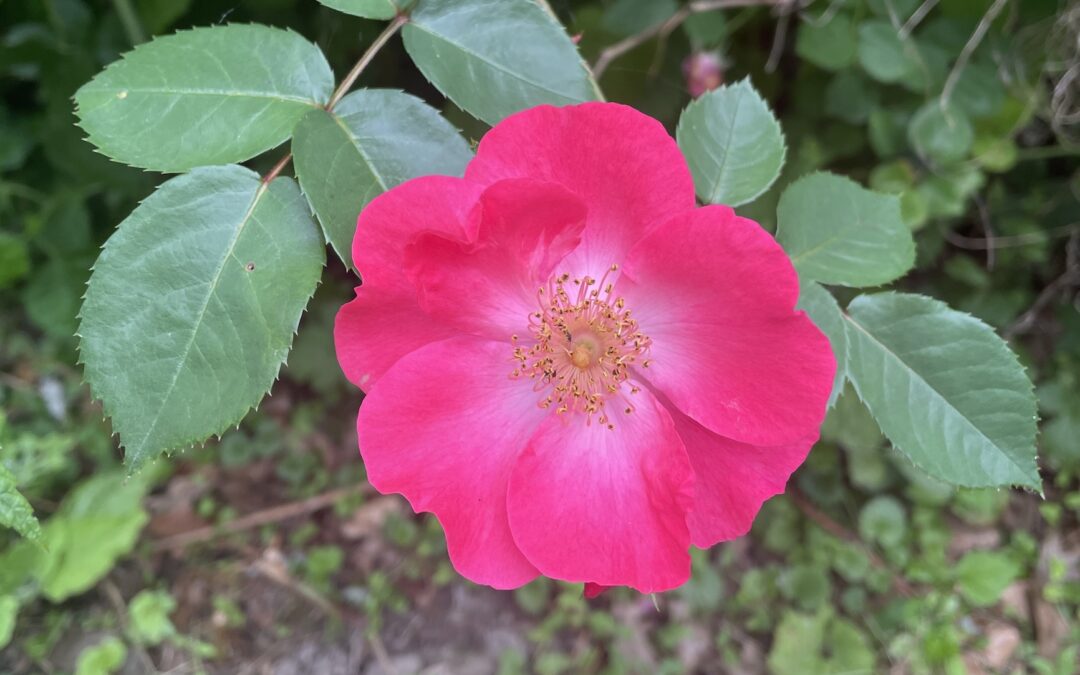
Cover art is by me of our beautiful rose from our gardens. For more of my flower and nature photography, you are welcome to browse my Flower Shop.
For more of my writings, browse through my Art of Love.
If you wish to support me and my work, you may do so by sharing it or donate here. For personal readings with me, you may visit my Offerings.
Your support means so much to me! Thank you wholeheartedly!