This essay is part of my book What She Knows – Volume II: Story Threads from Myth, Folklore, and Fairytales. To learn more about the book and order, please visit its official page here.
It’s been -30 degrees Celsius this week, but still, I go out always for my morning walks each day. Whether snowy storms, freezing weathers, each morning I apply my sunscreen (and lots of it!), put on my winter boots, and out I go.
Truth be told, no thickness of jeans nor layers of wool beneath my coat can prevent the burning redness of my skin sometimes when I come back home – but, and still, I try to remain dedicated to my morning walks. Sometimes though, it’s so cold, that I feel a tear come down my cheek, and then somewhere midway it freezes. It can feel like needles pinching your face as it burns from the cold and winds.
But still, I walk. Even if only for a little bit. In yoga we say this is wind washing, wind cleansing. It builds resistance, perseverance, and grounds us.
Surely, spring always comes; it’s all just the cycles of the land.
There is someone who knows very well about the master of the winds, and nature’s ways. Her voice comes from the beautiful lands of the Indigenous Nenets people native to the Arctic region of the Northern Siberia.

Nenets people, photography by Fridtjof Nansen, October 1913
For those who don’t know: The Nenets are divided into two groups, each is autonomous: the tundra and the forest. The Nenets language is on the Samoyedic branch of the Uralic language family, with two major dialects, Forest Nenets and Tundra Nenets. They have a shamanistic and animistic belief system, which emphasizes respect for the land and its resources.
In their beliefs, similar to those of the Inuit, all animals, weather and landscapes have spirit. The shaman is one who mediates between the human and spirit worlds, restoring balance when it’s disrupted. Through respect, reciprocity and proper handling, all can live in greater harmony and peace.
The story which I have in a precious folk tale book from my childhood – its pages held by threads – is called Kotura, Master of the Winds.

A Nentse girl, photography by Fridtjof Nansen, August 1 1983
Kotura, Master of the Winds
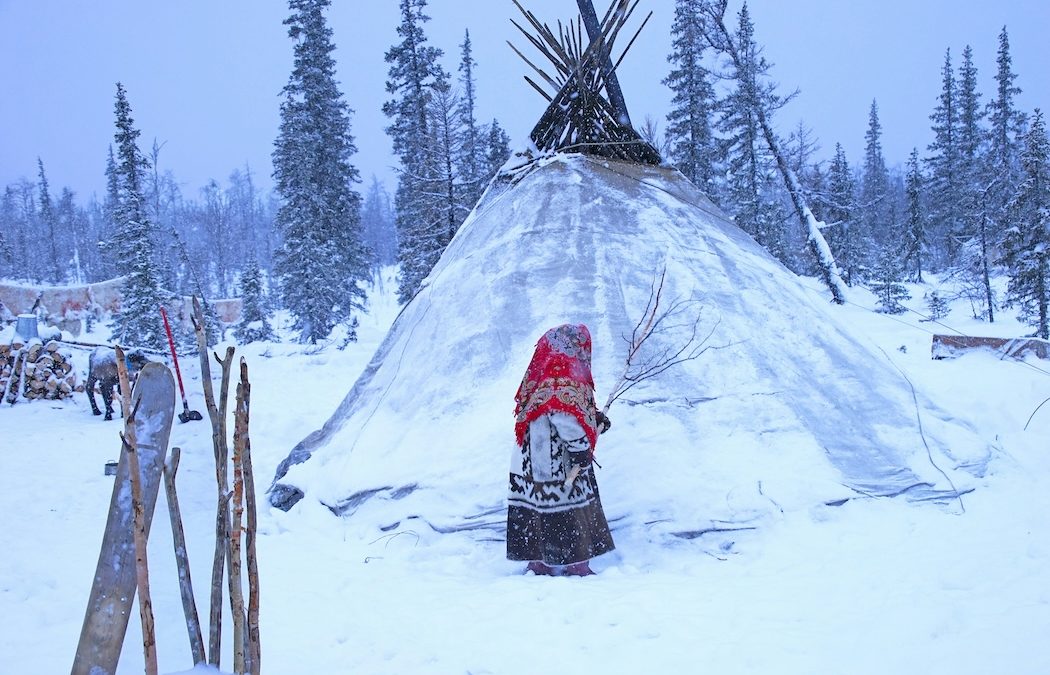
Many years ago, in the far away snowy Tundra lived a father with his three daughters in their little tschum (*tschum are the traditional dwelling tents of the Siberian people). One day, a horrible snowy storm came with powerful winds and all people in all other tents couldn’t go outside; one day, two days, three days, and the people became very hungry, frail, they needed the winds to stop for they will otherwise not survive.
So, the father told his daughters, “This is the Master of the Winds, Kotura. We cannot wait for the winds to stop, they will not; we need to go and plead with him for mercy. It seems he is angry and is seeking a good kind wife who will settle him into gentleness; so, you, my oldest daughter, go to him and ask him to stop the winds.”
“But I don’t know the way, father,” she replied.
“Do not worry,” her father replied, “I’ll give you this little sleigh and you push it forward, it will lead you. The winds will try to untie the strings of your coat, but do not tie them, keep going. The snow will try to cover your boots, but do not resist it, do not stop to wipe it off, keep going. And when you see the tall mountain, keep going, climb it; and when you reach the highest top, wipe off the snow from the boots, tie the strings of your coat. Then, a little sparrow will come to you and land on your shoulder, let her land there gently. Do not push her away, do not frighten her, embrace her with your gentle touch. And then put your body in the sleigh sliding down the mountain – you’ll reach Kotura’s tent. Enter it, but do not touch anything, just wait. Wait as long as it takes, until he comes; and when he comes, do as he may ask.”
The daughter began her path, but when the strings untied, the freezing cold was too much for her to withstand, and she started tying the strings; and she then started to wipe off the snow, and when she reached the mountain top and the anxious wings of the little sparrow were flapping before her, the girl started flapping her own hands in worry and fear pushing the sparrow away.
When she reached Kotura’s tent, she went in and immediately started eating all the food on the table; and when Kotura entered the tent, he asked the girl to prepare some food and go give it to an old woman in a nearby tent. The girl went out, but she felt really cold from the storm, winds howling and howling, she couldn’t find the tent and so she dropped the food in the snow returning to Kotura. “Did you give the food to the old woman?” he asked, “Yes, I did,” the girl lied.
He remained silent, in well knowing of her lies; and he then asked the girl to knit him a coat of the leathers available while he was out hunting the next morning. So the girl tried and tried, no needle was able to do anything; until suddenly an old woman entered the tent and gently asked the girl, “Girl, can you please look into my ear, there is something bothering me?” “No, I have no time old woman, leave me alone, I have work to do.” When Kotura came back, he tried the coat the girl had tried knitting, but it was not well made at all, and he became even angrier, making the winds even more severe.
Back at the father’s tent, he asked his second daughter to go and try to plead with Kotura; but she did the same as the first. She didn’t let the wind, didn’t let the snow, she pushed away the sparrow, she ate all the food and lied to Kotura about giving it to the old woman, and she then didn’t lend a helping hand to the woman about her ear.
“It is now only up to you my third daughter. My heart aches but I need to let you go for only you now can save us in our village. I know it’s freezing cold, but try to remember what I told you, and just keep going.”
Winds pierced her, untied the strings of her coat baring her skin in the freezing cold, but she kept going.
Snows covered her feet, her boots, and only barely she could take steps forward, but little by little, one foot and then another, she kept going, remembering her father’s words that she should stay focused.
On top the mountain, she finally opened her eyes, and stood still in exhale; and then the anxious flapping wings of the sparrow came before her, but the girl stayed gentle, stayed calm, and the sparrow too calmed itself, softened its worried and fears, and settled into gentleness and safety on the girl’s shoulder.
When the girl entered Kotura’s house, she waited, and when he came and asked her to prepare the meal and bring it to the tent of the old woman, the girl agreed. She prepared the meal, and then went out to search for the tent; nothing was appearing anywhere, the winds were howling and howling, the girl was freezing but didn’t give up; and suddenly the little sparrow came and showed her the way. The girl knocked on the door, and when the old woman came out, the girl said, “Here is a meal for you to eat, dear woman, Kotura sent me to give it to you.”
“Okay,” said the old woman, and gave the girl a silver plate covered by cloth. “Bring this to Kotura.” When the girl gave the plate to Kotura, he saw inside it some needled for sewing, so he smiled, knowing that the girl did indeed find the old woman’s house and was honest.
He then told the girl that using the needles she should knit him a nice warm coat, and “If you make me this coat to fit me perfectly and keep me warm, I’ll stop the winds and the save your father and all the people.” The girl tried, and tried, but for hours she couldn’t make the needles fit and thickness of the leathers; and just as she was about to lose hope and give up, into the tent came the old woman. “Girl, I have something in my ear bothering me, can you please help me.”
The girl, as kind as she was, left her work for a while, and looked into the woman’s ear – only to find a tiny girl inside the ear. She gently called her to come out and let her know not to fear her. And out of the ear then came out not one, but three, other tiny girls – all of them with needles and offered to sew up Kotura’s coat.
When Kotura came home and saw the coat perfectly fit him, he smiled and said, “You are a kind soul indeed; you helped feed my mother, the old woman, and you were kind to my sisters, the three girls with the needles; so here, the winds will now calm, as my heart too is now settled into peace and grace for your people.”
Winds pierced her, untied the strings of her coat baring her skin in the freezing cold, but she kept going. Snows covered her feet, her boots, and only barely she could take steps forward, but little by little, one foot and then another, she kept going, remembering her father’s words that she should stay focused. And on top the mountain she finally opened her eyes, and stood still in exhale; and then the anxious flapping wings of the sparrow came before her, but the girl stayed gentle, stayed calm, and the sparrow too calmed itself, softened its worried and fears, and settled into gentleness and safety on the girl’s shoulder.
When the girl entered Kotura’s house, she waited, and when he came and asked her to prepare the meal and bring it to the tent of the old woman, the girl agreed. She prepared the meal, and then went out to search for the tent; nothing was appearing anywhere, the winds were howling and howling, the girl was freezing but didn’t give up; and suddenly the little sparrow came and showed her the way. The girl knocked on the door, and when the old woman came out, the girl said, “Here is a meal for you to eat, dear woman, Kotura sent me to give it to you.”
“Okay,” said the old woman, and gave the girl a silver plate covered by cloth. “Bring this to Kotura.” When the girl gave the plate to Kotura, he saw inside it some needled for sewing, so he smiled, knowing that the girl did indeed find the old woman’s house and was honest.
He then told the girl that using the needles she should knit him a nice warm coat, and “If you make me this coat to fit me perfectly and keep me warm, I’ll stop the winds and the save your father and all the people.” The girl tried, and tried, but for hours she couldn’t make the needles fit and thickness of the leathers; and just as she was about to lose hope and give up, into the tent came the old woman. “Girl, I have something in my ear bothering me, can you please help me.”
So the girl, as kind as she was, left her work for a while, and looked into the woman’s ear – only to find tiny girl inside the ear. So she gently called her to come out and let her know not to fear her. And out of the ear then came out not one, but three, other tiny girls – all of then with needles and offered to sew up Kotura’s coat! When Kotura came home and saw the coat perfectly fit him, he smiled and said, “You are a kind soul indeed; you helped feed my mother, the old woman, and you were kind to my sisters, the three girls with the needles; so here, the winds will now calm, as my heart too is now settled into peace and grace for your people.”

Nenets people, photography by Fridtjof Nansen, October 1913
Symbolism of the wind
Wind is not mere air; shamans recognized it as the earth’s breath, a conduit for spirits, and a herald of the changing seasons. The people of many Indigenous cultures mastered the art of paying attention to, comprehending, and harnessing this element. It is about learning to listen to the wind, and to all of nature’s messages, as we are part of nature not separate from it.
A storm, winds howling, lightening and thunders, perhaps soon the rain. It is all just movement needed, a cleansing for freshness to enter us and to feel rejuvenated. You see, a storm isn’t just wind, rain, lightening, and thunder, it is how we understand ourselves and how we live together in our world and with one another.
Kotura is a spirit being, master of natural force. Within the Nenets folklore and cosmology, nature is governed by master or spirit owners, who are beings of the upper worlds. These beings are the animals, weather and wind, and as such, they control our world. Any imbalance or disorder on our earth is to be harmonized first there in the spirit and wildlife world.
So, in our tale, the girl acts as the shaman – the one who journeys through danger or a hostile place; then corrects the behaviour towards beings with her kindness towards animals, which shows proper relationship with the spirit world; she endures the hardships and perseveres with integrity; and ultimately, she restores balance – the wind calms, the food for the people returns.
Let the wind, let the snow, let the sparrow gently on your shoulder
Kindness and patience of rhythm matters. We are the seasons, the temperatures, the waxing and waning of moons and travelling of constellations across the skies. We are the soil and the water and the hands and the roses. It matters how we move along the landscapes and various seasons; it matters how we touch and speak, it all leaves behind imprints. It matters how we live in union and balance with one another – do we make harmony or harm.
There is tenderness and wisdom in this tale – reminding us that each step matters in ways we may not understand yet, so it is important to allow it all to happen and to open our palms in gentleness. There is trust in this tale, and there is togetherness and support, because no we’re not meant to do it all by ourselves. We’ll have a little sparrow to help us, we’ll have three little girls hidden to help us, we’ll have a wise woman to help us in ways we wouldn’t even recognize immediately. Step by step, stay focused on the now, winter or snow or winds, it’s all part of everything. This is a tale of humanness – of our humility to help one another, our courage to show up and our willingness to support.
What the winds know is that harmony starts from within; and to restore balance, we must restore the right relationship to all around us from within us. When we have love in our inner lands, winds will blow it outward and seeds will become roses. When we come into inner harmony, when we approach and touch all around us with reverence, kindness and peace, winds bring us abundance.
So, when winds speak, listen; listen to what it is saying, bringing and seeking of us also. There may be a different kind of movement that will be inspired within you to go forward. And then, open your palms, become the bride to love, offer it yourself in love, wisdom and beauty.
For personal readings with me, you are welcome to browse through my Offerings.

For more of my writings, browse through my Art of Love.
If you wish to support me and my work, you may do so by sharing it or donate here. For personal readings with me, you may visit my Offerings.
Your support means so much to me! Thank you wholeheartedly!
Cover photograph by Hans Jurgen Mager.